Reduce coordination
Remove status chasing, duplicate entry, context gathering, and manual routing from work that spans teams and systems.
Forward-deployed AI engineering
We embed with mid-market and enterprise teams to redesign how work gets done across the company. We preserve the systems, operating knowledge, and human judgment that matter, then introduce AI and automation in coordinated waves so the business moves faster and employees move with it.
The production gap
The hard part is not adding another automation. It is understanding how work moves across teams, systems, decisions, and exceptions, then changing it without losing the knowledge, controls, or technology the company depends on.
Remove status chasing, duplicate entry, context gathering, and manual routing from work that spans teams and systems.
Move continuously from intake to decision to action, while the right people keep control of real exceptions.
Give employees more time for judgment, customers, and improvement while AI handles repetitive coordination and execution.
How we work
A typical first wave moves from on-site discovery to a decision-ready audit, then into implementation, testing, employee adoption, and continuous improvement.
We work alongside employees and leaders in the first department, tracing real queues, systems, handoffs, exceptions, and judgment calls. We learn what makes the operation work, including the nuance that should not be automated away.
We turn the fieldwork into a decision-ready audit for the first wave. It shows where AI can act, where people must decide, which systems should stay, what should be built or bought, and how this department connects to the wider company roadmap.
We implement the highest-value workflows inside the existing environment and test them on real cases. Employees who own the work shape the controls, receive practical enablement, and help decide when the system is ready for broader responsibility.
We track quality, adoption, speed, cost, and exceptions, then improve the models, tools, controls, and workflows behind the system. Proven capabilities move into the next wave across the company.
Existing systems, new products, custom agents
We start with the software, data, and workflows already inside the company. We keep and connect what still works, add proven AI products where they create value faster, and build custom agents where the company's work is distinctive.
Our AI research agents continuously monitor the market, tracking new products, pivots, capabilities, integrations, pricing, and availability. They combine that market pulse with our growing catalog of evaluated AI tools, helping our engineers identify and verify the strongest options for each implementation.
Most implementations use a combination of all three, chosen for fit rather than a preference for custom code.
Integrate the systems, data, and workflows the company already relies on so information and action can move across the work.
When an existing product can provide the required capability faster, we find it, verify it, and integrate it into the wider system.
Create custom agents and automation where the logic, controls, data, or operating advantage is specific to the company.
Featured tools · Live catalog
Their availability, positioning, fit, pricing signals, and official destinations come from the same live records as the AI tool index.
 Featured tool
Developer tools
Codex is OpenAI's software-engineering agent for working across local repositories, cloud tasks, IDE sessions, terminal workflows, and code review. It can inspect code, edit files, run commands and tests, and delegate longer tasks in isolated cloud environments.
 Featured tool
Developer tools
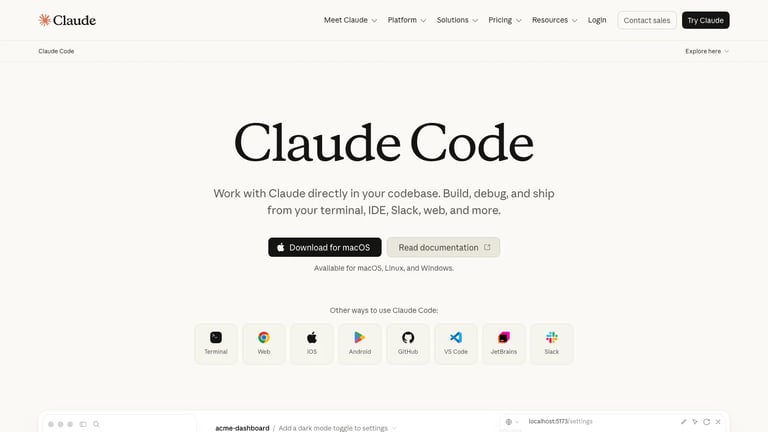
Claude Code is Anthropic's coding agent for reading codebases, editing files, running commands, debugging, refactoring, and automating development workflows from a terminal or supported IDE. Team and enterprise controls add centralized settings, permissions, and usage visibility.
 Featured tool
Voice generators
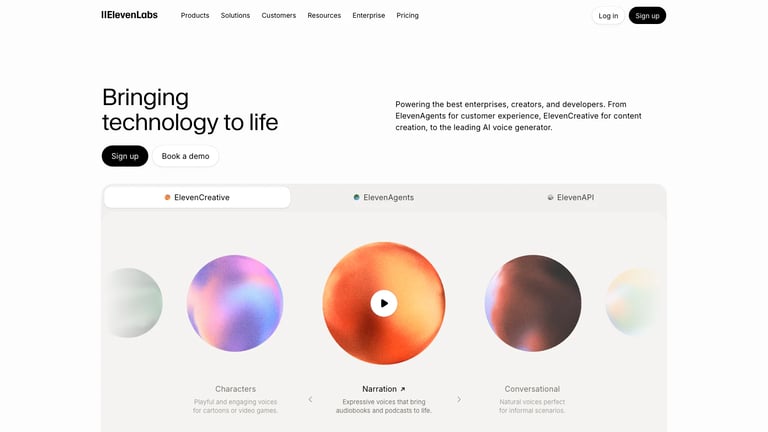
ElevenLabs provides web tools and APIs for generating speech, cloning voices, transcribing audio, dubbing media, creating music and sound effects, and deploying conversational agents. Its creative platform serves content production, while ElevenAgents supports voice and chat automation across customer channels.
 Featured tool
AI assistants
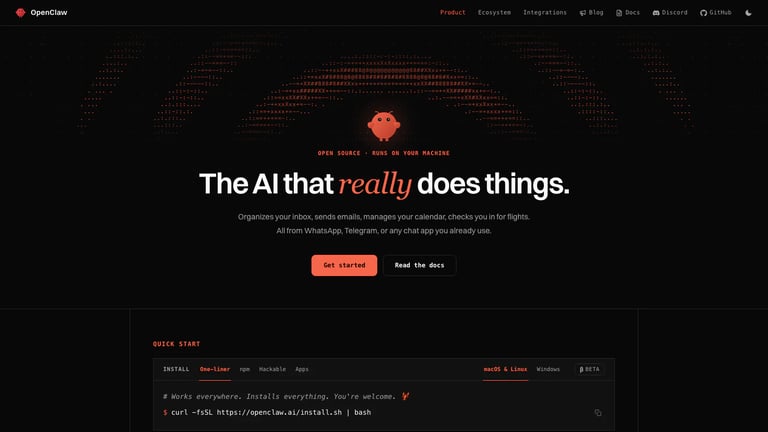
OpenClaw is a local-first personal AI assistant that connects models, tools, and communication channels. It can work through WhatsApp, Telegram, Discord, Slack, Signal, iMessage, and other channels while keeping its gateway and state on infrastructure the user controls.
 Featured tool
App builders
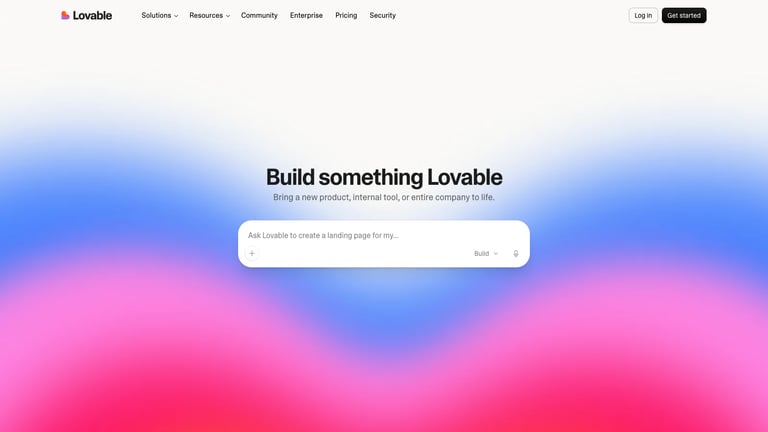
Lovable turns natural-language instructions into editable full-stack web applications with frontend, backend, database, authentication, integrations, and deployment. It supports rapid prototyping as well as ongoing product development with real code and managed cloud services.
 Featured tool
Video generators
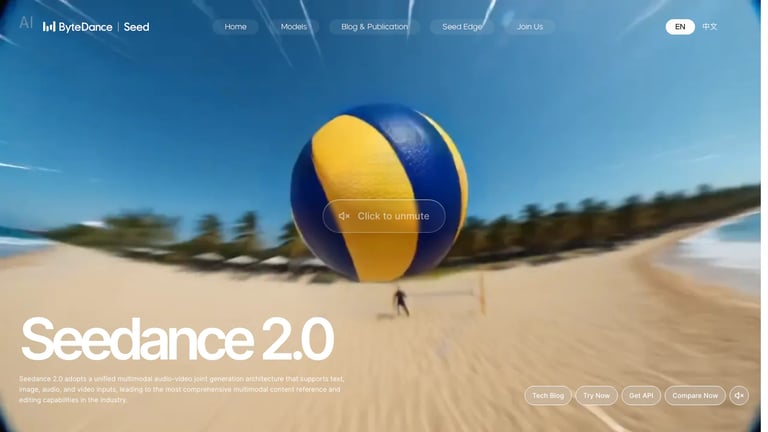
Seedance is ByteDance Seed's video-generation model family. Seedance 2.0 accepts text, image, audio, and video references, and generates or edits multi-shot audiovisual sequences with controls for subjects, motion, camera movement, composition, lighting, and sound.
Featured placement never changes factual product status, limitations, alternatives, or our right to decline a listing.
Reference systems
Each reference shows where a first wave starts, which existing tools remain, where people retain judgment, and how later waves connect adjacent workflows and functions.
Explore all use casesMulti-entity finance teams
A close-readiness system that watches reconciliations, collects missing evidence, prepares exception queues, and gives controllers a live operating picture before close day.
B2B revenue teams
An agent system that assembles approval packets, checks pricing and margin policy, routes decisions, updates the CRM, and prepares the customer handoff.
Commerce, distribution, and logistics teams
A resolution agent that joins ticket, order, payment, inventory, shipment, and policy context. It then takes the approved action and records the outcome everywhere it matters.
Production-ready by design
A useful agent can act. A production agent also knows its boundaries, records its decisions, evidence, actions, and overrides, and hands judgment to the right person.
Test against real cases, edge conditions, and unacceptable outcomes before authority expands.
Give every agent only the systems, data, and decision rights required for its role.
Keep people in control where policy, risk, confidence, or materiality requires it.
Log inputs, decisions, actions, fallbacks, and overrides so the system can be governed.
Frequently asked
We design the transformation across the company, then deliver it in bounded, coordinated waves. Each wave usually focuses on one department or operating area, preserves what already serves the business, and creates the foundation for the next.
Usually not. We preserve systems that already serve the business and build the execution layer around them. We replace a tool only when the evidence shows that keeping it would limit value, reliability, or adoption.
After the first-month audit, a well-bounded department wave usually moves through implementation during months two and three. Company-wide transformation is a phased program; cross-functional dependencies, integrations, permissions, data quality, risk, and adoption determine the timing of each wave.
We compare the existing stack, available AI products, integration fit, ownership cost, risk, and differentiation. Our research agents and evaluated tool catalog help us identify current market options before we recommend building anything custom.
The system is designed around your environment, data boundaries, operating knowledge, and named internal owners. Employees who do the work help shape and test each wave. Documentation, enablement, and adoption support are part of delivery.
Field notes